

Protecting cells from within
Oxidative stress, mitochondria and longevity: what role does Ergothioneine play?
Today, healthy ageing is becoming increasingly important. The aim is no longer simply to slow down the appearance of visible signs of ageing, but to maintain healthy cell function for as long as possible in order to promote healthy ageing. This shift towards healthy ageing has transformed market expectations. In the food supplements and nutricosmetics sectors, concepts such as ‘healthy ageing’, ‘cellular health’ and ‘skin longevity’ now occupy a central place in innovation strategies.
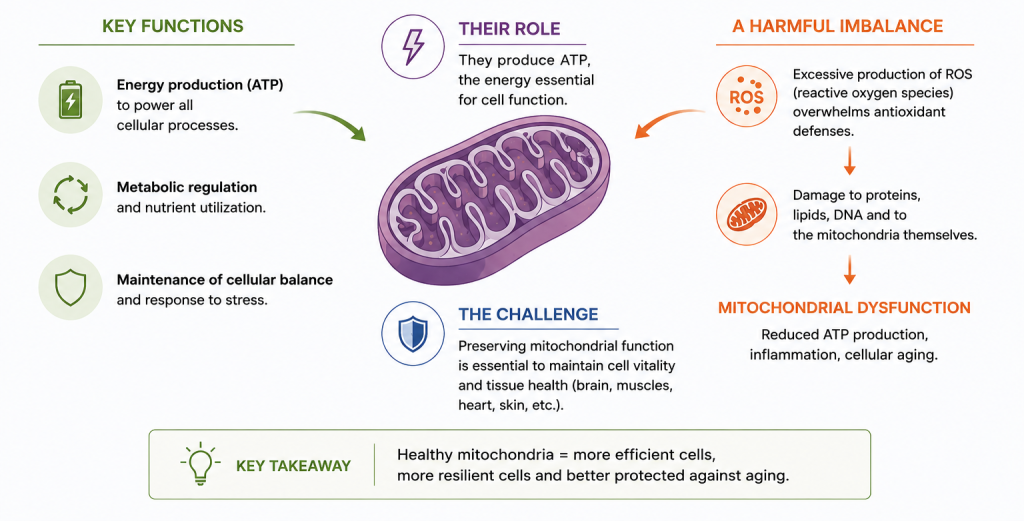
Among the most widely studied biological mechanisms are oxidative stress and mitochondrial dysfunction. Closely linked, they contribute to several of the processes involved in ageing. Mitochondria, often referred to as the cell’s ‘powerhouses’, produce adenosine triphosphate (ATP), the main source of energy required for the functioning of virtually all cellular processes. This metabolic activity naturally generates reactive oxygen species (ROS), which play an essential role in cell signalling. When their production exceeds the capacity of the body’s antioxidant defence systems, a state of oxidative stress can set in and promote the gradual deterioration of DNA, proteins, lipids and the mitochondria themselves. This phenomenon can then fuel a vicious circle that may exacerbate mitochondrial dysfunction and contribute to cellular ageing.
Ergothioneine is now recognised as a molecule with unique biological properties. Research shows that its benefits extend beyond simply neutralising reactive oxygen species (ROS). Thanks to its specific transporter and its ability to accumulate in certain tissues, it is attracting growing interest in approaches to cellular protection.
A molecule naturally retained by the body
Unlike most dietary compounds, ergothioneine has a specific transporter, OCTN1, which facilitates its absorption and accumulation in tissues particularly exposed to oxidative stress. It is concentrated notably in the liver, kidneys, immune cells, red blood cells and the brain, suggesting a physiological role in cellular protection mechanisms.
Cell protection beyond the antioxidant effect
The action of ergothioneine is not limited to scavenging free radicals. Preclinical studies show that it may help to protect cell membranes, limit oxidative damage to DNA and proteins, chelate certain pro-oxidant metal ions and preserve mitochondrial function.
Dr Ergo® is manufactured using a proprietary process of complete enzymatic fermentation, combining directed enzyme evolution, high-density fermentation, enzymatic catalysis and a unique trans-crystallisation step.
Quality characteristics include:
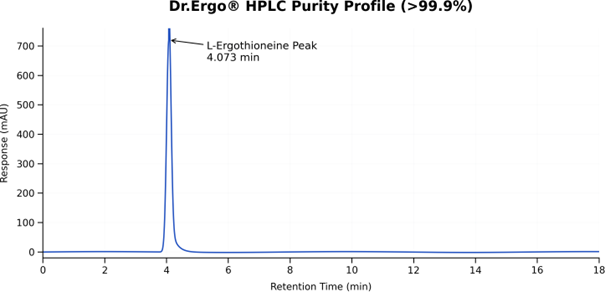
• Purity > 99.9%
• High stability
• Non-hygroscopic crystals
• Odourless ingredient
• Novel Food authorisation in Europe
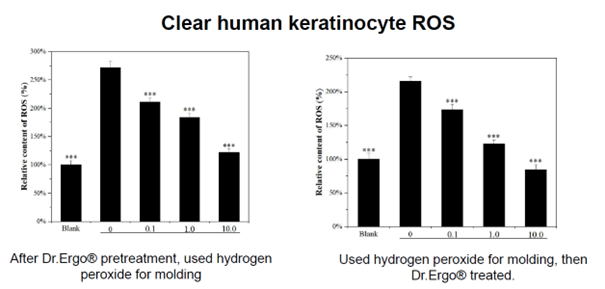
In vitro tests demonstrate, in particular, a strong ability to scavenge free radicals, with dose-dependent activity against hydrogen peroxide (H₂O₂) and the DPPH radical. In human keratinocytes subjected to oxidative stress, Dr.Ergo® significantly reduces intracellular ROS production, both preventively and following the induction of oxidative stress, suggesting a dual protective and reparative effect.
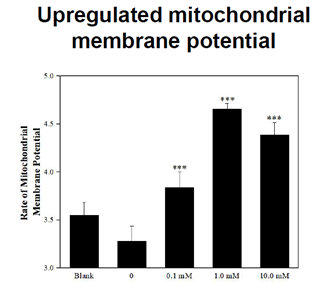
Studies also highlight its role in supporting mitochondrial function. Dr.Ergo® improves mitochondrial membrane potential and reduces UV-induced superoxide production, two parameters closely associated with maintaining cellular energy activity and limiting oxidative stress.
An initial clinical study involving 19 adults with minor skin imperfections (acne, pigmentation spots or a dull complexion) assessed the effects of daily supplementation with 25 mg of Dr.Ergo® over a four-week period. Analyses carried out using the VISIA imaging system revealed a significant improvement in several skin quality parameters, notably the appearance of pores, wrinkles, UV spots, pigmentation spots and porphyrins. No adverse effects were reported.
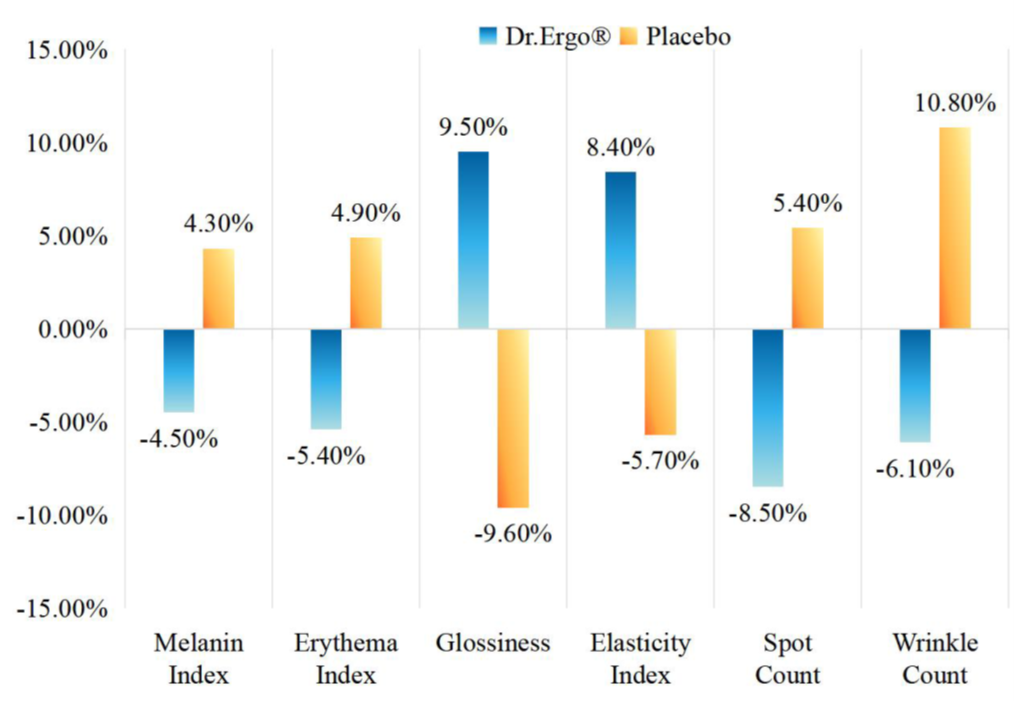
A second randomised, double-blind, placebo-controlled clinical trial was conducted involving 66 women aged between 35 and 59. The participants received 30 mg of Dr.Ergo® or a placebo for 8 weeks, with several skin quality parameters assessed: pigmentation, redness, radiance, elasticity, wrinkles and spots.
After 8 weeks, Dr.Ergo® demonstrated statistically significant improvements (p < 0.01) compared with the placebo across all the criteria assessed. In particular, participants taking the supplement showed a reduction in melanin index, erythema, wrinkles and pigmentation spots, as well as an improvement in skin radiance and elasticity. No significant adverse effects were reported.
A cosmetic grade is also available, opening new opportunities for topical applications targeting skin longevity.
Long confined to its role as an antioxidant, ergothioneine is gradually establishing itself as a cell-protective active ingredient in its own right. Its specific transport, targeted distribution in tissues subjected to oxidative stress, multiple mechanisms of action and the emergence of clinical data now make it a particularly relevant molecule for formulations dedicated to healthy ageing, skin longevity and mitochondrial health.
In a market where expectations are shifting towards more mechanistic and scientifically underpinned approaches, ergothioneine perfectly illustrates the transition from ‘traditional’ antioxidants to a new generation of active ingredients capable of supporting cellular longevity strategies.